The Search Visibility Crisis Professional Firms Are Missing
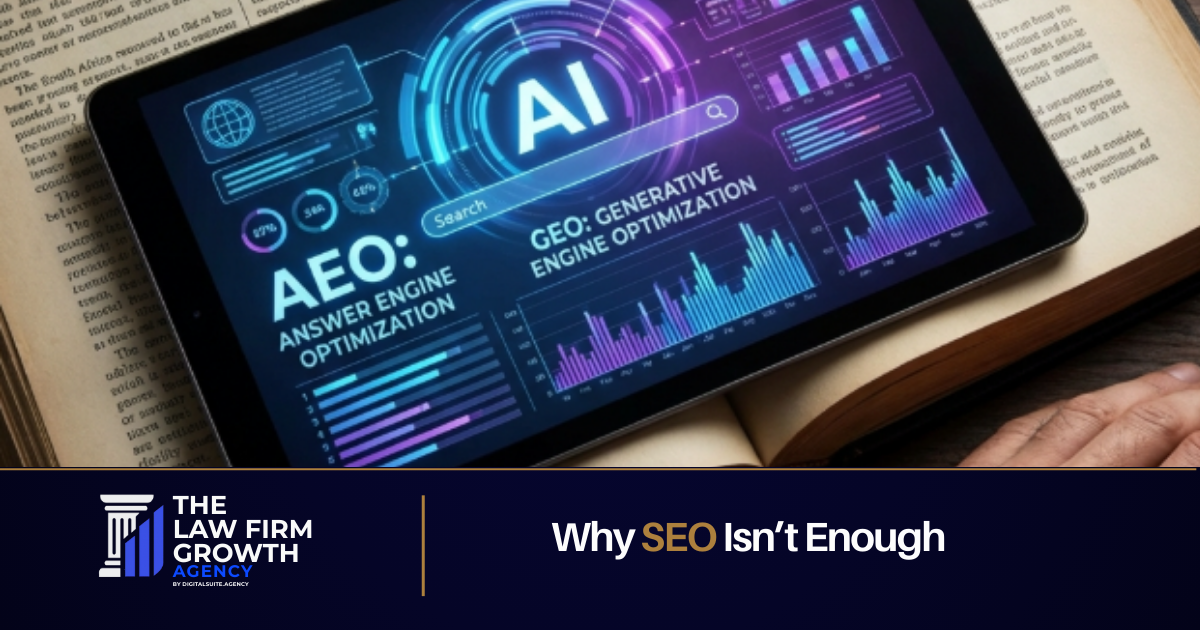
TL;DR: South African family law firms are losing search visibility because AI systems (ChatGPT, Google AI Overviews) now answer legal questions directly. Traditional SEO no longer guarantees visibility. Firms need two parallel strategies: Answer Engine Optimization (AEO) for featured snippets and Generative Engine Optimization (GEO) to become cited sources in AI-generated answers.
What South African family law firms need to know:
-
60% of Google searches end without a click. Your content needs to appear in AI answers, not just search results.
-
Firms with AEO strategies capture 23% more visibility than traditional SEO-only approaches.
-
Being cited in AI answers generates 35% higher click-through rates and 29% higher trust scores.
-
47% of firms lack a GEO strategy, creating a competitive window for early movers.
I've watched South African family law firms lose search visibility for months now. Practices across Johannesburg, Cape Town, Durban, and Pretoria invest in content, they publish articles, they update websites, but returns keep declining.
The problem isn't content quality. Search infrastructure has fundamentally changed. Most firms optimize for a system no longer in operation.
What's Happening to Search Visibility in South Africa
Gartner predicts traditional search engine volume will drop 25% by 2026 because of AI chatbots and virtual agents. 60% of Google searches now end without a click.
This isn't a trend. This is a structural shift in how people find divorce attorneys, custody lawyers, and maintenance advice before they reach your website.
ChatGPT hit 800 million weekly active users by October 2025. Growth of 2.6x in under 12 months. 44% of AI search users now rely on AI as their primary information source. Only 31% still depend mainly on traditional search engines.
Right now, someone in Sandton is asking ChatGPT about divorce procedures. Someone in Stellenbosch is searching for custody templates. Someone in Durban is researching maintenance obligations.
They form opinions about which firms to contact based on AI-generated summaries. If your competitors appear in those answers and you don't, you've lost before the conversation starts.
The reality: Your prospective clients are getting answers without ever visiting your website. If you're not visible in AI responses, you're invisible.
What Is Answer Engine Optimization (AEO)?
AEO targets featured snippets, voice search, and "People Also Ask" boxes.
The goal: provide direct, structured answers to specific questions.
Examples for South African family law:
-
"What are the grounds for divorce in South Africa?"
-
"How is child custody decided in South African courts?"
-
"What happens to property in a divorce with ANC?"
Firms with comprehensive AEO strategies capture 23% more search visibility compared to traditional SEO-only approaches. Early movers who started in early 2024 now capture 3.4x more answer engine traffic than competitors who waited.
For South African family law practices, this means visibility when prospective clients ask about the Divorce Act, the Children's Act, protection orders, or maintenance court procedures. Before they start calling firms.
Bottom line: AEO gets you into the answer box. If you're not there, someone else is.
What Is Generative Engine Optimization (GEO)?
GEO is different.
GEO makes your firm a cited source when AI systems synthesize information across multiple references. When ChatGPT or Google's AI Overview generates an answer, GEO determines whether your content gets included in that synthesis.
Most firms optimize for neither AEO nor GEO. They remain focused on traditional SEO metrics while their visibility disappears.
The competitive advantage window is open. Not for long.
How to Optimize for Answer Engines (AEO)
Google AI Overviews appear in 30% of all searches. 74% of problem-solving queries. These are the moments when someone determines whether they need a family lawyer, what their rights are in a custody dispute, or how to approach a divorce settlement.
If your firm isn't visible in these AI answers, you start every client conversation at a disadvantage. Or never get the call.
Technical requirements for AEO visibility:
-
Answer specific questions in the first 40 to 60 words of your content
-
Add FAQ and HowTo schema markup so machines parse your expertise
-
Structure headers to mirror natural search language
-
Include statistics every 150 to 200 words for fact density
What this looks like in practice:
Write "The Divorce Act 70 of 1979 recognizes five grounds for divorce in South Africa: irretrievable breakdown, mental illness, continuous unconsciousness, adultery, and malicious desertion."
Not "South Africa has divorce laws similar to other jurisdictions."
How to Optimize for Generative Engines (GEO)
Technical requirements for GEO authority:
-
Publish comprehensive content showing subject matter depth (1,500+ words)
-
Cite authoritative sources throughout (legislation, case law, official resources)
-
Update content regularly because AI models prioritize fresh, verifiable data
-
Display clear author credentials and institutional expertise
Research from Princeton and Georgia Tech found content formatted for LLM extraction is 3x more likely to be cited.
The barrier isn't budget. The barrier is thinking architecturally about how content functions.
Key insight: AEO gets you into the answer. GEO makes you the trusted source behind the answer. You need both.
Why Citations Matter More Than Clicks Now
Traffic to traditional "guide" and "how-to" content has dropped 34.7% and 88.3% respectively as AI answers general questions directly. AI consumes the top of the funnel. This is where family law firms build thought leadership and capture early-stage client attention.
Those blog posts you published about "Understanding Parental Responsibilities and Rights" or "The Divorce Process in South Africa"? If they're not structured for AI visibility, they're invisible. Quality is irrelevant if AI systems don't cite you.
Here's what most firms miss:
Sources cited by answer engines get 27% higher click-through rates than traditional search placements. Firms recognized as authoritative sources in answer engine results show 29% higher trust scores in perception studies.
For family law, where trust determines whether someone calls, this is everything. Being cited for information about maintenance obligations or custody arrangements builds credibility before the first consultation. The game shifted from generating clicks to earning citations.
The data:
-
When your firm is cited in an AI Overview, organic CTR increases 35% compared to traditional rankings
-
Average CTR for a #1 ranking dropped from 0.73 to 0.26 between March 2024 and March 2025 (64% decline)
-
Traffic to informational content continues declining while AI-cited sources gain visibility
Strategic truth: Be in the answer or lose the visibility. There's no middle ground.
Why Third-Party Sources Beat Your Own Website
Firms are 6.5x more likely to be cited through third-party sources than their own domains in AI responses. Wikipedia and Reddit are among the most frequently cited domains in AI Overviews, AI Mode, and ChatGPT.
This means AI systems are more likely to cite a Reddit thread about South African divorce law than your firm's expertly written explanation. That is, unless you actively build authority across multiple platforms. If you're not controlling your narrative, someone less qualified is.
The volatility problem:
AI Overview content changes 70% of the time for the same query. When AI generates a new answer, 45.5% of citations get replaced with new ones. This volatility means static content strategies fail.
That article you published about divorce procedures in 2022? It needs updating to reflect current legal precedents, recent amendments to the Children's Act, and evolving court practices.
47% of firms still lack a GEO strategy as of late 2025.
For South African family law practices, this creates a competitive advantage window. Especially in smaller markets like Bloemfontein, Port Elizabeth, the Garden Route, or Polokwane where most firms haven't adapted yet.
Core principle: Content isn't a published artifact. Content is living infrastructure. Treat it accordingly.
How South African Family Law Firms Should Build Authority Now
Over the years I've watched most family law firms approach content as a production problem. They publish articles. They update practice area pages. They occasionally write about recent cases.
The firms leading in this new landscape approach content as an infrastructure problem.
They build systems that generate citations, not just clicks. They structure their expertise around the Children's Act, the Divorce Act, maintenance court procedures, and domestic violence protections so AI systems parse and reference it. They maintain content as a living asset. Updating when legislation changes. When new precedents are set. When court procedures evolve.
The measurement shift:
Average CTR for a #1 ranking has dropped 64% in 12 months. Traditional SEO metrics are becoming less predictive of business impact.
The family law firms appearing in AI-generated answers capture higher-intent enquiries, build stronger trust signals, and establish authority compounding across multiple search experiences simultaneously.
When your firm is cited as the source for information about parental rights, divorce procedures, or protection orders, you're not getting visibility. You're being positioned as the authority before the prospective client picks up the phone.
Key principle: Content is infrastructure. Build it as a system, not a series of publications.
Frequently Asked Questions
What is the difference between AEO and GEO for family law firms?
AEO (Answer Engine Optimization) targets featured snippets, voice search, and direct answer boxes. GEO (Generative Engine Optimization) focuses on making your content a cited source when AI systems synthesize information. AEO gets you into the answer. GEO makes you the trusted source behind it. South African family law firms need both strategies.
How do I know if my family law content is optimized for AI search?
Check if your content answers specific legal questions in the first 40 to 60 words. Verify you're using FAQ and HowTo schema markup. Review whether headers mirror natural questions like "What are grounds for divorce in South Africa?" Include citations to legislation like the Divorce Act and Children's Act. Update content when laws change or court procedures evolve.
Why are third-party sites cited more than law firm websites?
AI systems are 6.5x more likely to cite third-party sources because these platforms have established authority signals. Wikipedia and Reddit appear frequently because they're recognized as authoritative by AI models. To compete, family law firms must actively build multi-platform authority and structure content specifically for AI extraction.
How often should I update family law content for AI visibility?
AI Overview content changes 70% of the time for the same query, with 45.5% of citations replaced in new answers. Update content whenever legislation changes, new precedents are set, or court procedures evolve. Treat content as living infrastructure needing regular maintenance, not static published articles.
What schema markup do family law firms need for AEO?
Implement FAQ schema for common questions about divorce, custody, and maintenance. Use HowTo schema for procedural content like filing protection orders. Add Article schema with author credentials. Include Legal Service schema for practice areas. This markup helps AI systems parse and cite your expertise accurately.
Will traditional SEO still work for family law firms in South Africa?
Traditional SEO alone is declining in effectiveness. Average CTR for #1 rankings dropped 64% between March 2024 and March 2025. 60% of Google searches end without clicks. Firms need both traditional SEO and AI optimization strategies because search behavior has fundamentally shifted to AI-first discovery.
How do I measure success in AI search visibility?
Track citation frequency in AI Overviews and ChatGPT responses. Monitor organic CTR when cited (should be 35% higher than traditional rankings). Measure trust score improvements through client feedback. Track enquiry quality and intent levels. Traditional metrics like rankings matter less than citation authority and AI-sourced traffic quality.
What content length works best for GEO in family law?
Comprehensive content over 1,500 words performs better for GEO because it demonstrates subject matter depth. Include citations to legislation, case law, and official resources. Cover topics like the Divorce Act, Children's Act, maintenance courts, and protection orders thoroughly. Balance depth with clear structure so AI systems extract information easily.
Key Takeaways
-
60% of Google searches end without clicks. South African family law firms must appear in AI-generated answers, not just search results.
-
AEO targets featured snippets and voice search. GEO makes your firm a cited source in AI synthesis. You need both strategies working simultaneously.
-
Firms cited in AI Overviews get 35% higher CTR and 29% higher trust scores compared to traditional search placements.
-
AI systems cite third-party sources 6.5x more than firm websites. Build multi-platform authority or lose control of your narrative.
-
Content volatility is high. 70% of AI Overview content changes per query. Treat content as living infrastructure requiring regular updates.
-
Traditional SEO metrics are declining in predictive value. Focus on citation authority, AI visibility, and enquiry quality over rankings.
-
47% of firms lack GEO strategies. Early movers in South African markets like Bloemfontein, Port Elizabeth, and Polokwane have competitive advantage windows.
Written by
Brad McMahon
More from Brad McMahon



Want to learn more?
Get in touch with our team to discuss how we can help your business grow.
Contact Us