
GEO for Law Firms: Mastering the AI Search Revolution
Want our law-firm growth insights surfaced first in your Google results? Make us a preferred source:
Add as a preferred source on Google
TL;DR
Generative Engine Optimization (GEO) for law firms is the new standard for legal marketing. It moves away from keywords to focus on AI-driven authority. By using structured data and expert content, law firms can ensure AI engines name them as the top choice for clients.
Why Traditional SEO Is Failing Law Firms
The legal marketing world changed forever when generative AI arrived. Traditional SEO tactics are now outdated. Chasing high keyword rankings or click volume is no longer enough to sustain a growing practice. Many law firms still measure success by how many people see their site. This is a massive mistake. In an AI-driven world, broad queries make you an anonymous data point. You get lost in a paragraph written by a machine.
To stay relevant, you must move to Generative Engine Optimization (GEO). This is not just a new marketing buzzword. It is how clients will find legal experts from now on. We are no longer just optimizing for a search list. We are building a map of your reputation. This map helps AI recommend your firm with confidence. AI rewards expertise, not just traffic. If your firm provides deep insights, GEO for law firms ensures the AI credits you for them. This keeps your brand strong and visible.
The transition from click-based search to answer-based search means your website cannot just be a brochure. It must be a technical resource. When you implement GEO for law firms, you focus on the quality of the information provided to LLMs. The goal is to capture the "zero-click" user. These are users who get their answer directly from the AI. If the AI doesn't name you, you don't exist to that prospect. Successful GEO for law firms forces the AI to acknowledge your firm as the origin of its knowledge.
Key Takeaway: SEO is dying. Law firms must use GEO to keep their authority and stay visible in AI search results.
What is Generative Engine Optimization (GEO)?
Many firms have a bad habit. They chase high-volume, generic search terms. They think more traffic always leads to more money. Because of this, they write shallow blog posts. These posts target broad terms that don't bring in good cases. AI engines like Google SGE or Perplexity do not care about keyword density in the old sense. They don't care about how many links you have if the content is thin.
Generative Engine Optimization (GEO) is different. It is about giving expert answers to hard legal questions. We tell our clients to focus on technical depth. You need to prove you are the definitive source for your niche. AI looks for a synthesis of facts. It wants to provide one clear answer to the user. If your strategy relies on old keyword tools, you will become invisible.
Mastering GEO for law firms means shifting your budget. Instead of 50 thin articles, you produce five authoritative white papers. You analyze recent court rulings or complex regulatory changes. This depth makes you a "target" for AI data scraping. When the LLM looks for the most reliable data, it picks yours. That is the core of GEO for law firms. You must satisfy the user's true intent through sophisticated, expert-level content. Deep expertise is the only way to win in the age of AI search.
Key Takeaway: GEO focuses on expert answers for niche questions. It values authority over simple search volume.
Focus on Intent Instead of Prompt Volume
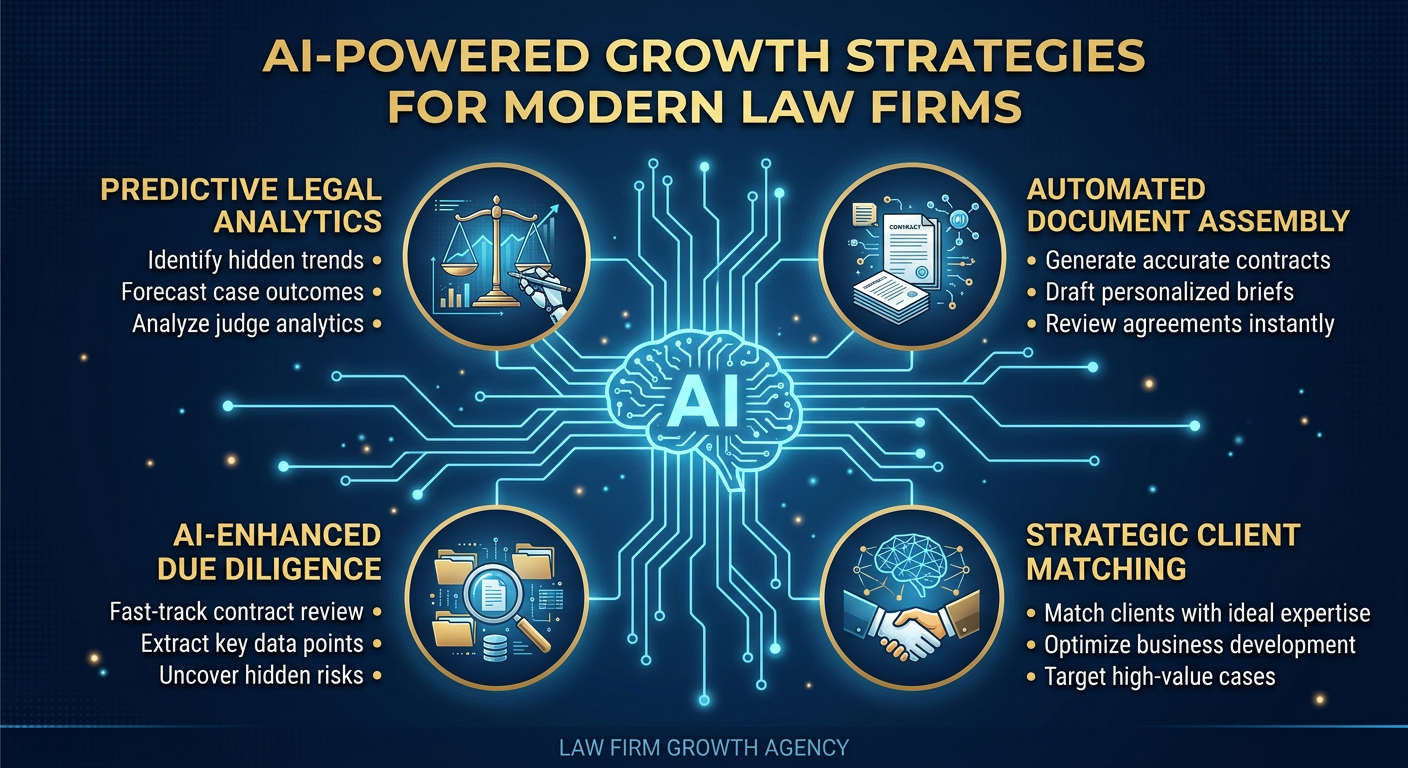
Targeting broad prompts is a risky move. When an AI answers a generic question, it mixes data from many sites. Your firm’s unique voice gets lost. You want the AI to recommend your firm specifically. Success now means citation authority. We look for times when the AI names your firm as the actual source.
A high-value prompt has three traits. First, it is specific. It uses a location and a niche legal term. For example, 'Illinois construction lien law requirements' is better than 'how to sue.' The first prompt attracts a high-value lead. The second attracts a tire-kicker. Second, it shows the user is ready to act. They aren't just browsing; they need help right now. Third, it lets an LLM cite you as an expert because your content is the only one that matches the niche.
We focus on these high-quality prompts. They lead to better cases and higher revenue. Success is not about being seen by everyone. It is about being recommended to the right person at the exactly right time. By refining your content for these specific prompts, you strengthen your GEO for law firms strategy. You must think about the questions a sophisticated client asks. They don't ask Google "who is a good lawyer." They ask ChatGPT "which firm in Miami has the most experience with maritime salvage claims." Your content must be the answer.
Key Takeaway: High-value prompts are specific and show a readiness to hire. These lead to AI citations and better clients.
Building Authority with a Knowledge Graph
AI models are aggregators. They look for consensus across the web. To influence them, you need a digital knowledge graph. This means your firm’s info must be identical everywhere. Your name, practice areas, and partner names must match on every site. This consistency creates a pattern that AI can trust.
Check your firm on legal directories and news sites. If the data is consistent, the AI sees it as a factual certainty. For example, if ten sites say you are the top maritime lawyer in Florida, the AI will believe it and report it as a fact. This is an essential part of GEO for law firms. We also use technical schema markup. This is code on your website that a machine can read. It tells the AI exactly what your expertise is without any guesswork.
This systematic approach is the best way to shape your online reputation. You can’t control the whole internet, but you can feed the AI the right facts consistently. When you maintain a clean knowledge graph, the AI filters out the noise. It focuses on your firm as the signal. This is why we insist on rigorous data audits for every client. If your LinkedIn says one thing and your website says another, your GEO for law firms efforts will fail because the AI will detect the conflict and lose trust.
Key Takeaway: Consistent data across the web helps AI trust your firm. Use schema markup to guide the AI to your expertise.
Structuring Your Legal Data for AI Models
Old SEO used meta tags and keyword stuffing. Those days are over. AI now looks for legal authority and intent. Technical SEO is still important, but the goal has changed. It is now a blueprint for your expertise. LLMs prefer structured data that follows clear legal logic.
We use Schema.org markup for this. This code highlights details like your legal services and attorney bios for an AI crawler. This makes it easy for the AI to see who the expert is. The content also needs markers of trust. Use direct citations of case law. Put clear, short answers at the top of your pages to satisfy "featured snippet" logic. AI likes a high signal-to-noise ratio. It rewards organized content that builds a logical argument.
By structuring data correctly, you boost your GEO for law firms performance. You are essentially handing the AI a cheat sheet. You tell it: "Here is the partner, here is the case they won, and here is the law they cited." When the AI sees this structured proof, it doesn't need to summarize a competitor's vague blog post. It simply uses your facts. This ensures that when a client asks an AI for a top lawyer, your law firm is the clear and obvious choice.
Key Takeaway: Use Schema.org and case law citations. AI rewards content that is easy to read and logically organized.
Using Narrative SEO to Link Your Brand to AI Results
AI search is becoming more like a conversation. This means your firm needs a clear story. We call this Narrative SEO. You want to link your brand name to specific legal outcomes. When an AI tells a story about a legal issue, your firm should be a central part of it.
This is not about tricks or black-hat tactics. It is about sharing your real expertise. If you publish deep analysis on new laws, and others cite you, the AI notices. It starts to link your firm to that specific topic. This goes way beyond simple backlinks. It is about being a recognized part of the legal world. We help firms share case studies and scholarly work that the AI can digest and attribute.
This builds a reputation that the AI recognizes instantly. When the AI summarizes a field, it will attribute new ideas to your firm specifically. This makes sure your brand is respected, not just found. This is how you win in a world of synthesized information. Effective GEO for law firms relies on this narrative. You aren't just a lawyer; you are the authority on a specific legal problem. When the narrative is consistent, the AI becomes your biggest referral source. You must dominate the conversation at the source level.
Key Takeaway: Build brand links by sharing deep legal analysis. This leads to AI attributing expertise to your firm.
Conclusion
The shift from traditional SEO to Generative Engine Optimization is a fundamental change in how law firms grow. It requires moving away from vanity metrics like prompt volume and shifting toward a systematic, expert-led approach. By focusing on high-value prompts, structured data, and authoritative citations, you future-proof your firm against the erosion of organic search.
The goal isn't just to be found on a result page. The goal is to be the only trusted answer the AI provides. If you want your firm to lead in this new era and avoid being silenced by the algorithms, we are ready to help. Book a strategy call with our team today to begin your GEO for Law Firms transition.
Key Definitions
Generative Engine Optimization (GEO)
A strategy to optimize digital content so generative AI systems recognize and cite a law firm as a primary authority.
Digital Knowledge Graph
A structured web of facts about a firm across the internet that helps AI verify a firm's reputation and expertise.
High-Value Prompt
A specific search query that shows a user is ready to hire a lawyer and has a complex, niche legal problem.
Narrative SEO
Building specific stories and brand links that AI engines use to connect a law firm to specific legal outcomes.
LLM (Large Language Model)
AI programs like ChatGPT or Google Gemini that process vast amounts of data to provide summarized answers to users.
Frequently Asked Questions
What is Generative Engine Optimization?
GEO is a way for law firms to show up in AI-generated answers. It focuses on expert content and structured data so AI models recommend your firm for complex legal questions.
Why is high prompt volume a risk for law firms?
High volume often means generic questions. If you only target broad terms, AI will summarize your info without naming you. You become an anonymous data point instead of a recommended expert.
How do I identify a high-value prompt?
A high-value prompt is narrow. It includes a specific location and a complex legal problem. These queries show the user is ready to hire a lawyer right now.
How do law firms get cited by AI?
Firms build citations by keeping their name and credentials identical across many sites. This includes legal directories, news sites, and official journals. This consistency builds an AI knowledge graph.
How do I structure data for an AI model?
Firms should use Schema.org markup. This is code that tells AI exactly who you are and what you do. Adding case law and clear FAQ sections also helps the AI trust your data.
Keywords
Generative AI
Legal Marketing
Law Firm SEO
GEO for Law Firms
AI Search Strategy
Legal Authority
Written by
Brad McMahon
Ready to see where you stand?
Get your free Google Maps visibility audit for your firm. Delivered in 24 hours.
Get your free visibility audit →