
Why South African Family Law Firms Are Losing Clients to Spreadsheets (And What Actually Works)
Want our law-firm growth insights surfaced first in your Google results? Make us a preferred source:
Add as a preferred source on Google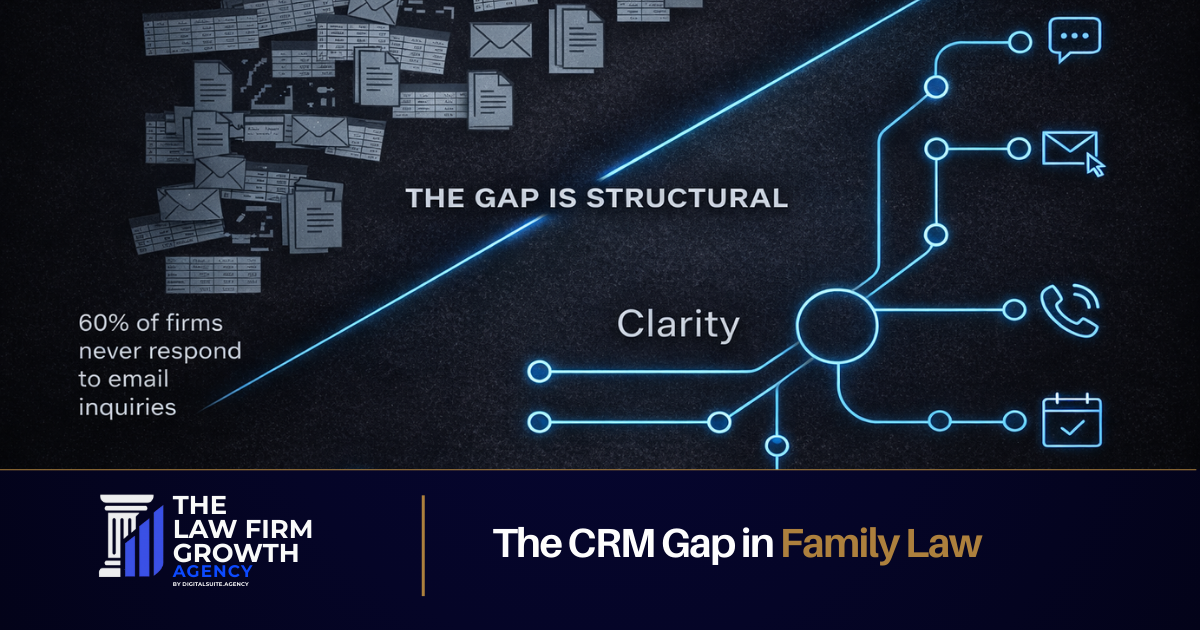
TL;DR: Family law firms in South Africa lose clients because manual systems (spreadsheets, email folders, paper files) no longer meet client expectations for speed and continuity. Legal-specific CRM software fixes this by centralizing case data, automating deadlines, ensuring POPIA compliance, and improving client retention by 20-50%.
Core answer:
Manual systems create response delays, lost information, and compliance risks
Generic CRM platforms lack legal-specific features (conflict checks, matter-based organization, trust accounting)
Legal CRM software improves efficiency by 20-50% and increases client retention
Automated deadline tracking and communication reduce malpractice risk
POPIA compliance requires security infrastructure built into legal CRM systems
Family law firms across South Africa still run on spreadsheets, email folders, handwritten notes, physical files. These tools worked fine 20 years ago. They don't work now.
A divorcing parent calls your firm at 4pm Friday. They expect you to know their case history without asking them to repeat everything. When they email Sunday night, they expect a response by Monday morning. When they're juggling custody arrangements, maintenance agreements, and property settlements, they expect you to track every moving piece.
Your clients aren't comparing you to other law firms. They're comparing you to their banking app and their doctor's patient portal. Every service that remembers their information and responds instantly. The gap between what you deliver and what clients expect is now a structural problem. Spreadsheets won't bridge it.
What "Making It Work" Actually Costs You
Most family law firms I work with don't think they have a technology problem. They think they have a time problem, or a staff problem, or a client communication problem. But when you look closer, the issue becomes more obvious.
Scenario one: A potential client emails your firm Tuesday morning. Your receptionist sees it, forwards it to the attorney who's in court until Thursday. The email sits. By the time someone responds, the client has hired another firm. You never even knew you were competing.
Here's the data: 60% of law firms never respond to email inquiries. Firms responding within one hour convert leads at significantly higher rates than those responding within 24 hours. Speed signals competence.
Scenario two: A client calls asking about their next court date. Your assistant searches through three different systems, checks the physical file, locates the information after eight minutes. The call ends and the client feels like you weren't prepared. You've eroded trust in a practice area where trust is everything.
Scenario three: Your firm handles 40 active family law cases. Each attorney manages their own files, their own follow-up system, their own client communication rhythm. Then someone goes on leave and cases stall. A client calls and reaches a different team member and they have to explain their situation again. Institutional knowledge lives in individual heads, not shared systems.
These aren't technology failures. They're system failures that technology could prevent.
Bottom line: Manual systems create delays, information loss, and trust erosion. The cost shows up in conversion rates, client satisfaction, and operational efficiency.
Why Generic CRM Software Fails Law Firms
The natural response is adopting customer relationship management software. Many firms do. They choose Salesforce, HubSpot, or another enterprise platform because those names are familiar. And then they spend months trying to adapt general business software to legal practice needs. The problem is structural mismatch.
Generic CRM platforms are built for sales pipelines, marketing campaigns, and product businesses. They move leads through stages, track conversion rates, and optimize for volume. Family law doesn't work that way.
You need conflict checks before you even speak with a prospect. You need intake forms complying with legal advertising regulations. You need matter-based organization where every interaction, document, and deadline connects to a specific case. You need trust accounting integration, court date tracking, and compliance features generic platforms don't include.
When firms force general CRM software into legal workflows, they create more work than they eliminate. Staff resistance increases. Adoption drops. The firm reverts to spreadsheets within six months.
Core insight: Generic CRM platforms are built for businesses that sell products, not firms managing sensitive legal matters under ethical obligations.
How Legal-Specific CRM Software Works Differently
Legal CRM platforms are built around how law firms operate. They organize information by matter, not by contact. They include built-in conflict checking, intake workflows, and deadline tracking. They integrate with legal accounting software, document management systems, and court calendaring tools.
More importantly, they're designed knowing law firms handle sensitive information under strict ethical obligations. Security isn't an add-on feature. It's foundational architecture.
In South Africa, POPIA compliance has transformed data protection from best practice into legal requirement. Fines for non-compliance reach ZAR 10 million. Violations can result in imprisonment.
Family law firms handle some of the most sensitive personal information available: financial records, custody arrangements, allegations of abuse, medical histories. This information needs security infrastructure most generic CRM platforms don't provide by default.
Legal-specific CRM systems are built with role-based access controls, audit trails, encrypted data storage, and compliance reporting features. These aren't optional capabilities you configure later. They're core to how the system operates.
Key difference: Legal CRM platforms treat compliance and security as foundational architecture, not optional features.
The Business Case for Legal CRM in Family Law
The decision to adopt specialized CRM software isn't about technology. It's about whether your firm scales trust and maintains service quality as you grow. Client retention economics tell the story.
Increasing client retention by 5% increases profitability by 25%. Acquiring a new client costs 15 times more than retaining an existing one. In family law, client retention happens through consistent communication, reliable follow-through, and making clients feel like their case matters. These aren't personality traits. They're system outputs.
Firms with effective CRM implementations see 20-50% improvements in efficiency and profitability. This isn't marketing language. This is what happens when you stop losing client emails, missing follow-up opportunities, and duplicating administrative work.
47% of CRM users report significantly higher client retention and satisfaction. The connection is direct. When your systems are efficient, your client experience improves. When clients reach you easily, get timely responses, and feel you're organized, they trust you more. Trust translates to retention, referrals, and revenue.
Economic reality: Client retention drives profitability more than client acquisition. CRM systems improve retention by ensuring consistent communication and reliable follow-through.
How Automation Reduces Malpractice Risk
The most valuable feature of legal CRM software isn't client management. It's risk mitigation. Family law cases involve critical deadlines: court appearances, response filings, custody evaluations, financial disclosures. Missing a single deadline results in default judgments, malpractice claims, and irreversible harm to your clients.
Manual tracking systems can fail under pressure. When your firm is busy, when staff members are out sick, when cases overlap, human memory becomes unreliable. Automated deadline tracking ensures that critical dates trigger reminders regardless of what else is happening in your practice.
The same logic applies to client communication. Automated intake sequences ensure every new inquiry receives a response within hours. Automated status updates keep clients informed without requiring attorney time. Automated appointment reminders reduce no-shows and last-minute rescheduling.
These automations don't replace human judgment. They protect the space where judgment matters by eliminating administrative friction causing errors.
Risk reduction: Automated deadline tracking and client communication reduce the manual errors leading to malpractice claims and missed opportunities.
What Clients Expect from Communication
Client communication preferences have changed faster than most law firms have adapted.
Research shows 76% of clients prefer different communication channels depending on the context. They want email for document sharing, SMS for appointment reminders, phone calls for sensitive discussions, and client portals for case status updates. Your clients don't want to adapt to your preferred communication method. They expect you to meet them where they are.
Legal CRM systems centralize all communication channels into a single case record. When a client emails, texts, calls, or logs into their portal, everything connects to their matter file. No one has to ask the client to repeat information. No details get lost between team members.
This isn't about convenience. It's about maintaining continuity in practice areas where clients are already dealing with high stress, emotional complexity, and life disruption.
Communication insight: Clients expect multi-channel access. Legal CRM systems centralize all channels into one case record, maintaining continuity without requiring clients to repeat information.
What This Means for Your Firm
The decision to adopt legal-specific CRM software is a decision about what kind of practice you're building.
You have two options.
Continue managing client relationships through disconnected tools, manual processes, and individual effort. This approach works until you miss a deadline. Until a client feels ignored. Until a competitor offers a better experience.
Or build systems that scale trust, maintain service quality, and protect your practice from the risks that come with growth.
The firms treating technology as infrastructure rather than an expense are the ones defining what professional family law practice looks like over the next decade. The tools exist and the business case is clear. The competitive pressure is building. What you do with this information determines whether your firm is building toward something sustainable or managing complexity until it becomes unmanageable.
Frequently Asked Questions
What is legal-specific CRM software?
Legal-specific CRM software is customer relationship management software built specifically for law firms. Unlike generic CRM platforms, legal CRM includes matter-based organization, conflict checking, intake workflows, deadline tracking, trust accounting integration, and compliance features required for legal practice.
How much does legal CRM software cost for family law firms?
Legal CRM software costs vary based on firm size and features. Most platforms charge per user per month, ranging from $50 to $200 per user. Implementation costs include setup, data migration, training, and customization. The ROI comes from improved efficiency (20-50% improvement) and higher client retention rates.
Do I need technical expertise to implement legal CRM software?
You don't need technical expertise to use legal CRM software. Most platforms are designed for legal professionals, not IT specialists. Implementation typically involves vendor support, data migration assistance, and team training. The learning curve is shorter than generic CRM platforms because the workflows match how law firms operate.
How does legal CRM software help with POPIA compliance in South Africa?
Legal CRM software helps with POPIA compliance through built-in security features: role-based access controls, audit trails, encrypted data storage, and compliance reporting. These features are foundational to legal CRM platforms, making it easier to meet data protection requirements and avoid fines up to ZAR 10 million.
Will my team actually use the CRM software or will they resist it?
Team adoption depends on how well the software matches your workflows. Generic CRM platforms often fail because they create extra work. Legal-specific CRM platforms have higher adoption rates because they're designed around how law firms operate. Implementation success requires clear training, leadership buy-in, and demonstrating how the system makes daily work easier.
How long does it take to see results from legal CRM implementation?
Most firms see initial results within 30-60 days: faster response times, fewer missed follow-ups, and better client communication. Full efficiency gains (20-50% improvement) typically appear within 3-6 months as the team adopts the system fully and you optimize workflows. Client retention improvements become measurable over 6-12 months.
What should I look for when choosing legal CRM software for my family law firm?
When choosing legal CRM software, prioritize these features: matter-based organization, conflict checking, intake automation, deadline tracking, trust accounting integration, POPIA compliance features, multi-channel communication tracking, mobile access, and vendor support. Request demos, ask for references from other family law firms, and test the software with your team before committing.
Can legal CRM software integrate with my existing tools?
Most legal CRM platforms integrate with common legal software: accounting systems, document management, email, calendaring, and court management tools. Check integration capabilities before purchasing. Poor integration creates data silos and reduces efficiency. Quality legal CRM platforms offer APIs and pre-built integrations with popular legal software.
Key Takeaways
Manual systems (spreadsheets, email folders, paper files) no longer meet client expectations for speed, continuity, and transparency in family law practice.
Generic CRM platforms fail law firms because they lack legal-specific features: conflict checks, matter-based organization, trust accounting, and compliance infrastructure.
Legal CRM software improves efficiency by 20-50% and increases client retention, with firms responding within one hour converting leads at significantly higher rates.
POPIA compliance in South Africa requires security infrastructure (role-based access, audit trails, encrypted storage) built into legal CRM platforms, with non-compliance fines reaching ZAR 10 million.
Automated deadline tracking and client communication reduce malpractice risk by eliminating manual errors that lead to missed deadlines and client dissatisfaction.
Client retention drives profitability more than client acquisition. Increasing retention by 5% increases profitability by 25%, making CRM implementation a strategic investment, not an expense.
Firms treating technology as infrastructure rather than expense define the future of professional family law practice.
The choice is building sustainable systems or managing complexity until it becomes unmanageable.
Written by
Brad McMahon
Ready to see where you stand?
Get your free Google Maps visibility audit for your firm. Delivered in 24 hours.
Get your free visibility audit →