What I Learned Studying a Marketing System for Family Law Firms That Actually Converts
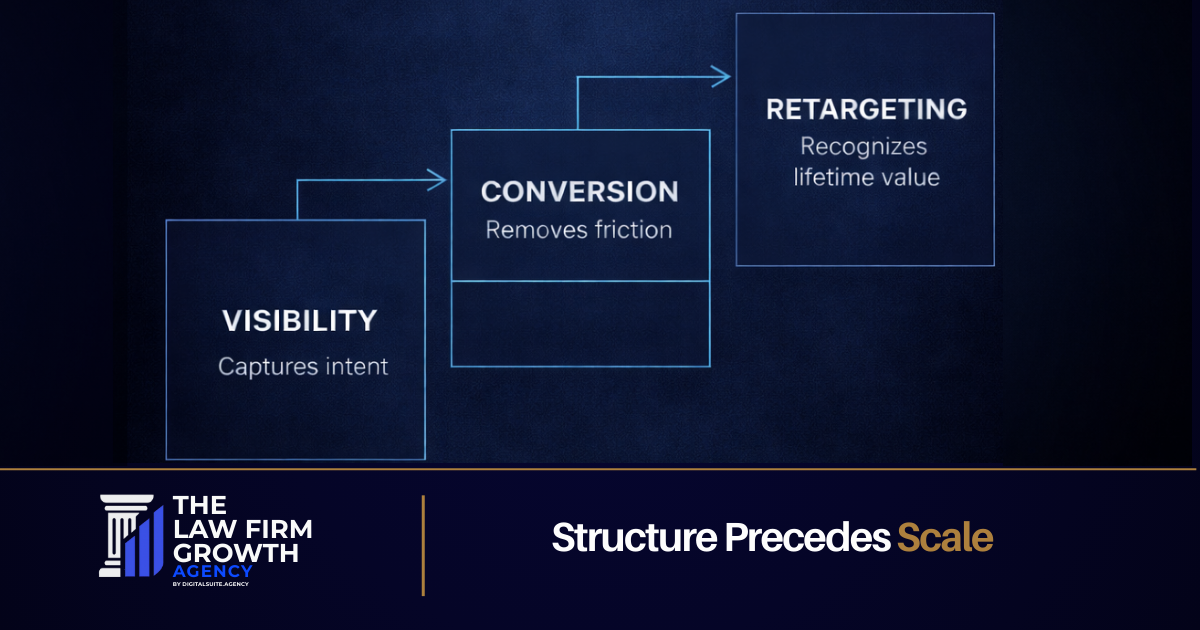
TL;DR: Most family law firms generate traffic but lose leads because they lack conversion infrastructure. A three-layer system (visibility, conversion, retargeting) outperforms isolated tactics by 47%. The key: build intake systems before scaling marketing. Structure precedes scale.
I recently analysed a marketing system designed specifically for family law firms. One that caught my attention because of its structural clarity.
The creator walked through the entire architecture: visibility strategy, conversion infrastructure, systematic retargeting. What stood out wasn't the tactics. It was the systems thinking behind them.
This wasn't another marketing campaign dressed up as strategy. It was a framework built around how clients behave when searching for legal help during sensitive life transitions. Visibility without conversion infrastructure creates expensive noise. This system addresses that gap.
Here's what I learned and how I'm applying these principles to the content strategies I build for professional service firms.
The Problem Nobody Was Naming
The breakdown started with a clear market reality: family law firms operate in a strange competitive position. Nearly 56,970 family law and divorce lawyers compete across the US. The sector is saturated. Yet most firms still struggle to generate consistent leads.
The issue isn't lack of demand. When someone types "uncontested divorce lawyer in Atlanta" or "best custody lawyer for fathers in Chicago," they're not browsing. They're looking for help. These searches represent the highest-intent leads you get.
But firms would invest in SEO, rank well, drive traffic to their site, then watch those leads evaporate. The phone would ring. Emails would come in. Then nothing. The gap wasn't visibility. It was what happened after someone found the firm.
That insight shifts everything.
The Conversion Layer Most Firms Skip
The second pillar addresses what happens after visibility generates traffic. The real friction point isn't getting attention. It's removing every barrier between initial interest and booked consultation.
Family law clients operate under unique constraints. They're dealing with sensitive situations. They value discretion. They're often researching outside business hours when they have privacy.
Traditional intake processes force them to call during business hours, leave voicemails, wait for call-backs. Every step adds friction. Every delay creates opportunity for them to choose someone else.
The conversion infrastructure was organized around three principles:
-
Online scheduling that works 24/7. Research shows many appointments get scheduled outside business hours for the following day. The case study showed one firm maintaining a 50% conversion rate while bringing on 22 new clients versus their baseline of 15 per month—a 47% increase in client acquisition without additional marketing spend.
-
Digital-first contact options. Chat features. Online forms. Methods that let clients engage privately before committing to public-facing interactions. This aligns with how people actually behave when researching divorce or custody matters.
-
Immediate response systems. Automated confirmation emails. Calendar invites. Reminder sequences. The infrastructure that makes clients feel acknowledged instantly rather than wondering if their inquiry disappeared into a void.
The conversion layer isn't about technology for technology's sake. It's about recognizing that client behaviour has shifted faster than most firms' intake processes.
When I build content strategies now, I map every piece back to conversion infrastructure. Does the firm have 24/7 scheduling? Digital intake forms? Automated follow-up? If not, content amplifies a broken system.
The Retargeting System That Recognizes Lifetime Value
The third pillar addresses the biggest strategic oversight: firms optimize for single-transaction value when the real economics live in lifetime relationships.
Business law provides a useful parallel. Long-term small business clients might work with an attorney on 15-20 matters averaging, for argument’s sake, around R5,000 per matter. That's roughly R100,000 in total revenue per client.
Family law has similar dynamics that firms consistently undervalue. Clients return for custody modifications, support adjustments, post-divorce disputes. They refer siblings, friends, colleagues going through similar situations.
Yet most firms treat every case as a standalone transaction. They don't build systematic follow-up. They don't maintain relationships beyond case closure. They don't create referral infrastructure.
The retargeting system addresses this through:
-
Multi-touch follow-up sequences that keep the firm present without being intrusive. Educational content delivered over time. Check-ins at strategic intervals when clients might need additional services.
-
Referral request systems that make it easy for satisfied clients to recommend the firm. Not aggressive asks. Simple mechanisms that reduce friction around word-of-mouth.
-
Content that positions authority for B2B referral networks. When people start thinking about wills and trusts, 68% turn to Google first before asking friends or family. Educational content doesn't just attract direct clients. It positions firms as the authority other professionals reference and recommend.
The insight here goes beyond family law. Systematic follow-up creates compounding returns that individual case work cannot across every professional service sector.
When I develop content strategies for clients now, I build retargeting sequences into the architecture from day one. Not as an afterthought, but as core infrastructure.
What the Data Actually Revealed
The case studies revealed a clear pattern. Firms that implemented all three layers (visibility, conversion infrastructure, and systematic retargeting) saw different results than those that only focused on traffic. The integrated approach created measurement frameworks that went beyond vanity metrics. These were systems that revealed what compounds over time.
SEO investment showed long-term ROI that outperformed paid advertising. Criminal defence firms reported 468% ROI. Business law practices achieved 642% ROI over three years. The key insight: Once your site ranks well, it continues generating leads organically without ongoing ad spend. Content becomes infrastructure rather than expense.
Despite proven results, overall utilization among lawyers remains low at 31% for SEO. About 74% of legal practices ensure mobile optimization, but most haven't systematized the full conversion layer.
There's a structural misalignment across professional services. Firms recognize that digital presence matters, but they haven't built the systems that turn visibility into measurable growth. The firms that close this gap gain disproportionate advantage while competitors remain fragmented.
That's the opportunity I'm focused on now. Helping professional service firms build that integrated infrastructure before they scale visibility.
What I'm Building Differently Because of This
Studying this framework changed how I approach content strategy for professional service firms. I now start with conversion infrastructure before visibility.
Most firms do it backwards. They invest in SEO, content, paid ads, then scramble to handle the leads those efforts generate. They bolt on scheduling tools, patch together CRM systems, improvise follow-up. Structure should precede scale. That principle runs through everything now.
This approach works because it treats marketing as connected infrastructure rather than separate tactics. Visibility captures intent. Conversion removes friction. Retargeting recognizes lifetime value. Remove any of these layers and the system underperforms.
The other insight I'm carrying forward: ethics aren't constraints in professional services. They're filters for sustainable advantage. The firms that prioritize client experience over aggressive conversion tactics build trust that compounds. The firms trying to optimize every interaction for immediate revenue create friction that costs them long-term relationships.
The market rewards integrity at a structural level. It just takes a bit longer for this to show up in the data.
The Pattern That Keeps Repeating
Since analysing this framework, I've started recognizing this same dynamic across different professional service sectors. Firms recognize they need better marketing. They invest in visibility tactics and generate leads, but then wonder why growth remains inconsistent. The answer is always the same: They're optimizing individual components instead of building integrated systems.
The framework isn't revolutionary. It's organized around how clients behave rather than how firms wish they would behave. High-intent searches reveal needs. Frictionless conversion captures those leads. Systematic follow-up recognizes lifetime value.
The firms that align their infrastructure with this reality stop guessing and start measuring. They replace frantic activity with intentional systems. They build marketing that compounds rather than depletes.
That's what I'm applying now to every content strategy I develop. Marketing for professional services isn't about campaigns. It's about architecture. The firms that recognize this distinction early gain advantages that become harder to replicate over time.
Key Takeaways
-
Structure before scale. Build conversion infrastructure before investing in traffic generation. SEO and content without intake systems creates waste.
-
Three-layer integration outperforms isolated tactics. Visibility captures intent, conversion removes friction, retargeting recognizes lifetime value. Remove one layer and the system underperforms.
-
Client behaviour has shifted faster than firm processes. 24/7 scheduling, digital-first contact, and immediate response systems align with how people research sensitive legal matters.
-
Lifetime value beats transaction thinking. Family law clients return for modifications, adjustments, and refer others. Systematic follow-up compounds returns individual casework cannot.
-
Content becomes infrastructure when paired with systems. SEO delivers 468-642% ROI over three years because it generates leads organically after initial ranking.
-
Ethics filter for sustainable advantage. Firms prioritizing client experience over aggressive conversion build trust that compounds. Integrity wins structurally over time.
-
Marketing is architecture, not campaigns. Professional services need connected systems that measure what compounds, not vanity metrics that measure noise.
Written by
Brad McMahon
More from Brad McMahon



Want to learn more?
Get in touch with our team to discuss how we can help your business grow.
Contact Us